Monday, February 18, 2013

7 Factors to Consider When Choosing a House Plan for Your Dream Home in Ghana

7 Factors to Consider When Choosing a House Plan for Your Dream Home in Ghana

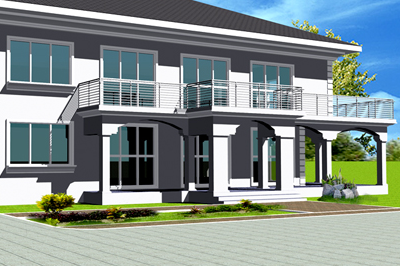
It can take years to save up enough money to build your dream home in Ghana—some people save for 10 years or more! After waiting this long, you may be in a hurry to get things started and choose a house plan without really thinking every aspect of the home through. Instead, take your time and take these factors into consideration when choosing a floor plan.

  1. Are the bedrooms grouped or separated? If you have young children you probably don’t want a floor plan with the master bedroom on one side of the home and the other bedrooms on the other side of the home.
  2. Is there enough space? You want to make sure that your existing furniture will fit. Also, if you have a large extended family that will frequently gathering in your home the size and openness of the common living space is an important factor.
  3. Can you afford the cost of construction? Bigger isn’t always better. Many people do not realize just how expensive raw materials and labor can be. According to a report titled The Housing Market in Ghana published by the Bank of Ghana, the average prices of new construction homes are:
    • One Bedroom: 33,145.00 Ghana Cedi (17,500 US Dollars)
    • Two Bedroom: 41,668.00 – 48,297.00 Ghana Cedi (22,000 – 25,500 US Dollars)
    • Three Bedroom: 60,608.00 – 68,184.00 Ghana Cedi (32,000 – 36,000 US Dollars)
  4. Can the house plan be modified? House plans that are expandable offer you more flexibility if your needs change in the future.
  5. Is the house plan engineered correctly? Once you submit your building permit application and floor plans to the Ghana Land Commission, it can take up to 3 months for approval. You want to make sure that the plans are engineered correctly so that you can obtain a permit without further delay.
  6. Do any areas of the home need to be handicap accessible? If so, you want to choose a floor plan without stairs. The doorways and hallways may also need to be wider.
  7. Is outdoor space important to you? An outdoor leisure space such as a covered porch can expand the usable square footage of your home and make it more enjoyable.
For more tips and advice visit Ghana House Plans. They employ the best local architects in the business and can create the perfect floor plan for your dream home in Ghana.

Monday, February 11, 2013

Why A Residential Building Permit In Ghana Is Necessary


The recent collapse of a shopping mall in Accra has brought a lot of attention to building permits in Ghana. It was determined that the building collapsed because the foundation was not strong enough and the deadly disaster could have been averted if the developer had obtained the necessary permits. Yet, many landowners are still circumventing the law. According to a survey conducted by the Physical Planning Department of the Sekondi/Takoradi Metropolis approximately 36 percent of the buildings in the area were built without obtaining the necessary permits. Ebenezer Dadzie Pantsi, head of the PPD has been cautioning developers to heed building codes and urged local authorities across the country to better educate landowners on the importance of permits.

Purpose Of Permits

Building permits are not designed to make it harder or more expensive to build a home in Ghana. The purpose is simply to strengthen the buildings and prevent disasters such as the mall collapse. Once a building permit is obtained, various governmental agencies see to it that the building is structurally safe. Some of the key elements in the process are:
  • Architectural and engineering design for approval from the Accra Metropolitan Authority
  • Fire protection opinion from the Fire Department
  • Inspections at the end of each phase of construction (foundation, floor level, rafters, roof, etc.) by the Building Inspectorate

Consequences of Building Without A Permit

The consequences of building without a permit can be quite costly. They may range from a monetary fine to the complete demolition of the home by local authorities and loss of investment. Modern Ghana reported that in 2011 more than 500 homes without building permits were demolished around the Weija Dam to prevent it from collapsing from unauthorized building encroachments. The financial loss of having your home demolished pales in comparison to other consequences of building without a permit—the loss of human lives.

Help With The Permit Process

The permit process can be difficult those who are unfamiliar with the local laws and regulations—especially foreign investors. Working with professionals such as the Ghana Homes Group can make the entire building process easier. They can help you choose a house plan that will be approved by the Accra Metropolitan Authority, prove that you legally own the land you intend to build on and submit an application to the Land commission.

Monday, February 4, 2013

Is It Time To Invest In Ghana Real Estate?


If you are looking for foreign investment opportunities, you may want to consider investing in Ghana real estate. The country has shown tremendous signs of political stability and economic growth in recent years, making it a good time to invest in Ghana. In fact, in a 2009 White House Press Release, President Barack Obama stated that, “…far too often discussions of Africa are focused on crisis. Ghana is not in crisis, and it's an example for the region and more broadly.”

Ghana's Growth

According to the world economic growth charts, Ghana’s GDP grew by 14.4 percent in 2011. This was largely due to new oil production and construction projects. While the 2013 estimates for economic growth are a bit more modest at 7.5 percent, the country’s economy is steadily growing. Ghana is listed in Stage 1 of the 2012-13 Global Competitiveness Report published by the World Economic Forum and is expected to sustain its competitiveness. The country has demonstrated more than 25 years of sound management. Another sign of Ghana’s tremendous economic growth is that World Bank recently upgraded Ghana’s economic classification from low-income to a lower middle-income status.

Ghana Residential Real Estate

Despite the shift in economic status, there still aren’t many housing opportunities for middle income families. Those who have chosen to invest in Ghana have primarily focused on upper class residences and neglected the growing demand for affordable, middle class residences. The local real estate industry needs investors to help finance medium scale projects for middle-income projects.

Commercial Real Estate

Demand for commercial real estate is also high. Retail occupancy rates are hovering right around 100 percent. Many international retailers have recently opened up shop in Ghana, including:
  • Shoprite
  • KFC
  • Woolworths
  • Bata
  • Deli France
With the success of these companies, it is expected that more American and European retailers will soon follow.

Investment Opportunities

It is time to invest in Ghana real estate. The lucrative investment opportunities are limitless. The demand is high for both residential and commercial projects. Investing in either type of real estate, however, requires in-depth knowledge of the building laws and local industry; experience is essential to the success of investments. Ghana Homes Group has that experience. For nearly a decade, the esteemed company has been bringing foreign investors and developers together with local engineers and architects to complete quality projects throughout the country.

Related Articles

What's your Ghana real estate story or experience? Share below and forward this article to your friends.

Monday, January 28, 2013

Homes in Ghana: Should You Buy or Build?


Ghana is a country with a booming economy. Although Ghana has not gained tremendous international press, the numbers speak for themselves. According to the CIA World Fact Book, Ghana’s Gross Domestic Product has grown almost exponentially in recent years. It grew by an estimated 4% in 2009 and shot up to a whopping estimated 14.4% in 2011. The housing market in Ghana is currently ideal, but you have to act fast.

Pros and cons of buying

The biggest pro when buying a house is that the house is already there. You might not get exactly what you want, but you won’t have much hassle either. One of the biggest cons of buying a home is the price. In addition, older homes can have costly repairs whereas major repairs are much less likely to be needed in a new home. Nevertheless, ask for a warranty when buying a new.

Pros and cons of building

Many things can go wrong when building a home. Some general contractors can be inexperienced, unreliable, or cut corners to save money. However, a quality company that has built hundreds of homes in Ghana knows what is going on. Often, single family homes are custom built according to International Building Code (IBC) regulations within a few months at most.

Ghana Homes Group is one of the best companies to design your home and help build to suit. Ghana Homes Group is a reputable design and build firm with established business relationships in the area. Instead of blindly choosing someone to design and construct a home, choose a firm that has a proven track record of success in architectural design. The largest problems with building a new home almost always involve the general contractor or design and build firm chosen.

You usually cannot be physically present during the entire building process when building a home in Ghana while living abroad. When building your customized dream home, you need to work with a firm you can trust. Never walk into a nightmare. Be confident in every aspect of building your home from the price estimate to the color of your new countertops.

What’s your experience? Did you buy or build your home in Ghana? Leave your comment below.

Monday, January 21, 2013

Building a Home in Ghana? 7 Warning Signs That You Chose the Wrong Contractor


Choosing a contractor to build a new home in Ghana can be a difficult task. There are a variety of slick-talking people who you may have confidence in during the initial stages of the process, but often turn out to be better con-artists rather than contractors. Sound familiar? Following are 7 warning signs that you chose the wrong contractor.

1. The deal sounded too good to be true. As with most things in life, if it sounds too good to be true it probably is.

2. The project is behind schedule and over budget. Many contractors promise unrealistic timelines to get a job, then under-deliver on those timelines. If you are making a lot of changes during the construction process, this can legitimately cause setbacks and overages; otherwise, you should find a new contractor.

3. The contractor is overcharging for materials. You should always ask to verify receipts for material purchases throughout the process to ensure that you aren’t being overcharged. Better yet, get a “written-in-stone” quote. With a full house plan, most contractors can give a final quote based on a bill of quantity.

4. You suspect he is using stolen goods. If your contractor tries to convince you to use different building materials than originally agreed upon, saying things like the materials were “left over from another job,” this is a pretty good indication that he is using stolen goods.

5. He did not ask for the proper permits. It is important that your home is up to code. Different municipalities have different building codes—and for good reasons. If your contractor did not ask for a building permit or refuses to comply with the permit process it usually means that he is taking shortcuts on the quality of the craftsmanship and your home may even be unsafe or be demolished by the city authorities.

6. If he tries to pay off authorities during inspections. This is a tell-tale sign that you have hired the wrong contractor. It usually means that he does not have the proper credentials or has violated the building code and process with the city in the past and is on probation or just doesn’t want them to uncover his shoddy work.

7. You simply don’t trust him. Never underestimate your own intuitions. If you feel uncomfortable with your contractor, there is probably a good reason why.
If you feel that you have chosen the wrong contractor, don’t despair. Ghana Homes Group has a long standing reputation for reliability and can help you. They have knowledge and expertise to guide you through the home building process with honesty, ease and understanding.

Tuesday, January 15, 2013

Homes in Ghana: How Strong is Your House Foundation?

Steps To Building A Solid Foundation

Homes in Ghana: How Strong is Your House Foundation?

Every good house begins with a good foundation. A foundation that has been laid with care will last for generations. When building a new house in Ghana, it’s important to work with experienced construction firms with an established track record. The implementation of best practices throughout the construction process will help ensure that your home is given a strong foundation.

The Basics of a Strong Foundation

A well-built house foundation begins with a thorough soil evaluation. The information gained from a soil evaluation tells the construction company what type of foundation can be safely built.  Some soil types are likely to shift and must be shored up before construction can begin. 

Once the soil evaluation data has been collected and analyzed, the land must be prepared.  It has to be graded correctly, the method of which depends somewhat on the type of soil present on the property.  Correct methods of soil preparation and grading will give the concrete foundation a level surface and will promote moisture drainage.

Guarding Against Moisture

Moisture and drainage are particular concerns of homeowners. The moisture naturally present in the soil can seriously impact the strength of a home’s foundation. This happens because water weakens building materials, leading to mold and rot. Temperatures also can impact the foundation, gradually cracking concrete foundations. This kind of damage can be prevented by the presence of vapor barriers. The initial barriers are usually placed during the grading stage; other barriers are placed as the rest of the foundation is built.

Judging the Strength of a Foundation

To get an idea of how secure a house’s foundation actually is, it’s best to consult an engineer or surveyor. They can personally inspect a home’s foundation to see if it was built according to code. They can also examine the records to review the findings of the soil evaluation and check to see if the moisture barriers have been correctly placed.

To keep your house foundation strong, you’ll need to inspect it on a regular basis. Once a year, check for cracks, chips, or crumbling concrete. If you spot any mold or rot, have it treated right away. Even the most solidly-built foundation can become weak as a result of neglect.

If a house’s foundation has been correctly built and maintained, it will remain strong for a long time.  Before committing to build your own home, purchase a custom-built home or doing it yourself, talk with an expert from Ghana Home Group.  Ghana Homes group, with its reliable and trustworthy construction companies will partner with you to build a strong and lasting home or foundation.

Saturday, January 5, 2013

4 Simple Ways to Build Your Dream Home in Ghana


4 Simple Ways to Build Your Dream Home in Ghana this Year. Each New Year offers a great time for setting goals for our lives, and opting to make constructive changes. It’s also the perfect time for igniting dreams or even for continuing what was not completed the previous year.

This new year, Ghana Homes is ready to help you build your dream home, whether in phases or at a go. We are offering several plans and options to help build your dream home that includes options for building of the entire house, building of just the foundation, the roofing, windows or just management of your construction work with our experienced engineers, architects and project managers. This means that if your funds are sufficient only for the foundation, we will build just the foundation until you have additional funds to continue. You can then continue the rest of the construction yourself or you can come back to us to continue. The bottom-line is, you have several options to get started on building your dream home this year.

Here are the 4 simple steps to help you get started:

  • Finalize a House Plan
    • Go to Ghana House Plans and select a House Plan (We do customization. Additional fee applies.)
    • Contact us for help with selecting a House Plan and discuss any customization needs.
  • Order a Bill of Quantity
    • After your House Plan is finalized, our Quantity Surveyors (QS) will develop a customized bill of quantity detailing construction cost (Additional fee applies).
  • Obtain a permit to build the house
  • Begin the foundation construction
    • Build the entire house if funds are available. If not, let us build just the foundation and continue when funds become available
We look forward to working with you for a prosperous and fulfilling year. Click here to contact Ghana Homes and let the dream of owning your own home begin to materialize!
 

Dont Miss Out On Updates, New House Plans & New Articles
Stay up to date! Simply fill out the forms below and we will notify you as soon as new House Plans become available, plus receive Ghana Homes house building insightful articles in your inbox.


About Ghana Homes

Ghana Homes provides luxury high-quality properties in Ghana . We offer state-of-the-art living conditions reflective of the rapid advancements in technology and a growing need for quality housing for both low and high income families. Our group is dedicated to a hassle free living environment in which our client can enjoy all of the benefits of a safe, attractive, and inviting property.

Other areas of service:

  • Architectural Services:
    • Ghana Residential Homes
    • Ghana Commercial Properties
  • Ghana Land Acquisition
  • Property Resale
  • Real Estates Law
  • All forms of real estates transaction in Ghana

Copyright © 2012 - GhanaHomesForSale.com - All rights reserved.