
Tuesday, January 23, 2018


Tuesday, March 21, 2017
Land Title Registration in 30 Days? The New Minister Demands

Registering your land helps you avoid or reduce litigation. It allows for easy transfer of interest especially after the land is sold out. It also helps the landowner use it as a surety to secure a loan. It removes the opportunity for fraud on innocent purchasers. Thus, a buyer, as well as the landowner, is protected against any unforeseen lawsuits in the future.
Unfortunately, getting your land registered can be a herculean task for many Ghanaians. As much as owning a property is a significant investment and comes at a high cost depending on where the land is situated, it is even more expensive trying to get your land registered. The length of time it takes a person to go through this process is stressful and discouraging. It can take you between one to three years to have your land registered.
It is as a result of this that the current Minister for Lands and Resources is pushing for a reduction in the duration of land registration. He is requesting that the land title registration period be reduced to 30 days. This decision forms part of the new government’s effort to delivering on a campaign promise made to Ghanaians during the run up to the 2016 elections. According to the New Patriotic Party (NPP), it will "commit to ensuring that turnaround time for land registration is reduced to 30 working days." Therefore the government has charged the Lands Commission to sensitize its staff to work together so that they can achieve this target.

Consequently, reducing the duration of land title registration will impact positively on the economy of Ghana. It is expected that this action will help improve the property management services and eventually encourage both local and international investors to invest in the Ghanaian economy. The country will gain more revenue through investor’s contribution to the economy for the development of the country. Ultimately, acquiring a land in Ghana will be made very easy and eliminate the famous land litigations in Ghana.
-------------------
Should the Ghana Land Commission facilitate or be in charge of land sales? Meaning every land deal should go through the agency?
What else would like us to write about? Please leave your comments below.
Wednesday, March 1, 2017
Financial Prospects For Housing - Expectations from The New Ghana Government on Housing - Part III

To wrap up on the series about housing in Ghana and the new government’s promises, finance is crucial to this discussion. The cost of housing forms a greater percentage of most households’ expenditure. And since housing is a necessity, it is very dear to most Ghanaians.
The source of funding a home has, in the past in Ghana, generally been limited to borrowing from friends and family and savings, until home financing institutions and banks started providing mortgage services to prospective house owners. Though this has brought relief in the housing sector, the Majority of homeowners in Ghana over the years contend with the growing cost of interest charged by banks on home loans. This is said to be one of the reasons accounting for the huge deficit in housing in Ghana.

To show commitment to the real estate industry in helping financial institutions provide financial assistance to ordinary Ghanaians, the current government outlined some interventions in its 2016 manifesto.
Accordingly, the new government seeks to facilitate the development of an active mortgage market to expand the mortgage loans to Ghanaians. Also, they will fully implement section 103 of the National Pensions Act 2008 (766) which stipulates pension benefits for housing of workers that, “A scheme may allow a member to use that member’s benefit to secure a mortgage for the acquisition of a primary residence.” This means that a person living on pension income can use that benefit to qualify for or obtain a mortgage.

New Ghana Government also added that they will work with identifiable groups like the Trade Union Congress (TUC), Ghana National Association of Teachers, Farmer’s Groups, etc. to facilitate the construction of homes for their members through the provision of the appropriate financing guarantees. These approaches will form part of the means to achieving the aim of developing funding schemes to assist home buyers in acquiring units and ultimately solve the rising fear of high cost of building or purchasing a home by the average Ghanaian.
Friday, February 10, 2017
Expectations from The New Ghana Government on The 1.7 Million Housing Deficit
Expectations From The New Ghana Government: Affordable Housing For All?
If the promise of the current government of Ghana, in its 2016 manifesto, is anything to go by, then it can be projected that this year and the subsequent years will be good for the real estate industry; specifically, for the private individuals in the real estate development and prospective homeowners when the government starts to implement its policies. The new government of Ghana seeks to work with the public and private investment entities to provide quality and affordable housing for all Ghanaians.
Their vision is to blend public policy with private investment “to deliver quality affordable social housing and private housing solutions that meet the needs and financial capacity of the ordinary Ghanaian.” In effect, they identified some challenges in this sector including a housing deficit of about 1, 700,000 units, undersupply of annual requirements of housing units and the high cost of buying or renting a home. These constraints in the housing sector in Ghana are not new to most Ghanaians. It has been estimated that about 50% of the Ghanaian population live in substandard houses, slums, uncompleted buildings, shops or kiosks and in extreme cases on the streets.

To help realize the dreams of the ordinary Ghanaian to acquire a decent building for rent or on purchase, the NPP government promised to adopt “a novel way to the construction of homes and institute creative financing schemes”. They hope to use these means to first improve the general affordability and access to decent homes for all working Ghanaians and their families, develop housing units targeted at the vulnerable and marginalised in society, develop financing schemes to assist home buyers to acquire units, improve the quality of infrastructure in existing communities and use public policy to develop the entire housing value chain.

It is evident from the above that the Ghanaian is the focus of this vision. Therefore, whether your aspiration is to own or rent a house, the government wishes to help you realize these aspirations in order for you to make a decent living. Consequently, it is expected that there will be an increase in demand for housing, all things being equal, with respect to the vision of this administration.
As a prospective homeowner, start your journey with us. Check out our House Plans here and take the first step toward building your dream home.
Monday, February 6, 2017
Real Estate Developers Expectations from The New Ghana Government

A new government is in place in Ghana and already stakeholders in the real estate industry are agitating for the fulfillment of some promises made before the general elections in 2016.
One of such promises was the abolishment of the 5% VAT which affected commercial and residential properties developed by real estate developers.
In January 2015, the previous government introduced a 17.5 percent tax on real estate. The industry players were not happy about the tax and after deliberations and negotiations between the Ghana Real Estate Developers Association (GREDA) and the government, the 17.5 percent was replaced with a flat rate of 5%. In October 2015, a statement from the Ghana Revenue Authority was issued to inform the general public, and in particular mortgage providers and operators in the Real Estate and Construction sector, that The Value Added Tax (amendment) Act, 2015 (Act 890) obliges real estate developers to charge and account for VAT on taxable supplies of immovable property at a flat rate of 5% on the value of each taxable supply; and that estate developers engaged in the sale or supply of immovable property are required to charge and account for VAT.

Though there was a reduction, many real estate developers were not happy and requested that it be scrapped. They reasoned that the imposition of this tax meant that many low-income earners will not be able to access mortgages since there will be high mortgage rates and eventually purchase a house. Also, prospective house owners may be scared away looking at the striking increase in prices of houses since the 5% will finally be borne by the new home owner.
Following the above explanations, operators in the real estate and construction sector are eagerly anticipating for the total scrapping of the 5% tax introduced in 2015. Accordingly, many prospective house owners and industry players expect the new administration to live up to expectation by ensuring that they fulfill their promise to bring relief to developers and consumers. This will encourage spending; thus, there will be an increase in sales. It will reduce the burden on estate developers resulting in an appreciable growth rate in the economy and allow more people to access or qualify for mortgages.
Thursday, December 29, 2016
Home Maintenance Culture in Ghana

Time is a valuable resource that tests the quality of things as they age. And as things get older, they become weaker. This is why every building needs maintenance. Often, people wait until something is broken before they get it fixed rather than maintaining the home. But developing a preservation culture is an effective measure to ensure that your property is safe and in good condition. Adopting a maintenance culture can benefit the homeowner or the tenant. The following are the advantages of keeping a home maintenance culture:
First, adopting home maintenance practices helps you detect problems early and quickly. Conducting routine checks helps you familiarize yourself with your home, the various housing systems like electrical, plumbing and drainage systems and features like the door, roof, etc. Thus, any defect in or improper functioning of any appliance or feature in your house is easily identified for immediate action.
 Source: Zillow
Also, home maintenance allows you save money. Waiting until something is completely damaged can cost you more money to fix. Early detection of a problem allows for early action to be taken to address the problem. Small problems are solved quickly, and the cost for repair works is reduced. Consequently, conducting regular maintenance checks on your building will go a long way to keeping you from making unexpected expenses.
Furthermore, regular maintenance checks allow you to increase the life span of the housing systems and its features which will help enhance the value of your house. It helps you preserve your home. It is a fact that a good home maintenance practice is a better way of improving upon the value of your home. Home maintenance will enable you to make a profitable sale if you decide to sell it.
 Source: Zillow
Finally, performing regular maintenance checks is a security measure which ensures the safety of your home and family. You can avoid any form of accidents if you take extra care and pay attention to the condition of your home. You can protect your family from burns, shocks, falls and even death by taking the responsibility of ensuring that your house is in a good state.
 Source: Zillow
Home maintenance should not be limited to only occasional weeding and repainting. It should be characterized by regular inspection and testing of electrical appliances as well as cleaning. These are good practices which will ensure that you detect problems early, save money or reduce cost, increase the lifespan of your home and guarantee the safety of your family and home.
Leasehold vs. Freehold Lands in Ghana

As a homeowner or landowner, has it ever crossed your mind that your property may one day be taken away from you because your contract has expired? A lot of land or home owners are unaware of the various forms of ownership that exist in Ghana. They did not know (and still, may not know) that buying a property could make them outright owners or tenants whether it is purchased from an estate company or an individual.
Lands in Ghana are usually owned by the government, stool, or families or clans. Lands belonging to the government are either vested or state lands. The government controls these properties and managed by the Lands Commission. Stool lands are under the custodian of chiefs or traditional rulers while a family owns family lands and administered by the family head. Thus, these represent the types of land that exist in Ghana.
In Ghana, you can own a land either through buying or inheritance. The most popular approach to owning a land in Ghana especially in the urban areas is through buying. With the expansion of the real estate industry and high demand for accommodation, many people are rushing to invest in lands and houses. However, what some prospective property owners and even individual landowners are not aware of is the fact that, in Ghana, purchasing a land does not make you the outright owner of that property.

Lands in Ghana are sold as leaseholds as opposed to freeholds. Leasehold interest is a temporary right to occupy a land or property, while freehold interest is the outright ownership of a land or property for an unlimited period. The lease is for a fixed term, but with freehold, the landowner is the custodian of the land till eternity. A lease is a legal document based on property and contractual law which spells out the rights and obligations of both the Landlord (Lessor) and Tenant (Lessee).
The period for most leases in Ghana is 99 years or more for locals and 50 years for foreigners. After the 99 years has expired, the land must be returned to the lessor unless the contract is renewed. People who are aware of this practice usually think that 99 years is too long a time for anybody to worry about returning a property or renewing a contract. Others too have not thought about what will happen after the 99years contract is over.

Thus, as a potential property owner, you need to know that it is almost impossible to buy a land or a house as a freehold in Ghana. Therefore, you need to find out about the number of years left on a lease before you commit to buying a property. This is important because it can affect getting a mortgage or the resale value of the property. On the other hand, if you are a house owner already who purchased a leasehold property, you need to prepare for the future just to prevent any long legal battle between your successor(s) and that of the person who sold the land to you.
5 Effective Ways To Get More Out Of Your Vacant Land in Ghana

Do you own a vacant land? Do you know that your bare land can be economically beneficial to you rather than leaving it empty and undeveloped? Here are some financially viable activities you can engage in to make your vacant land productive and even earn money on it.
Lease your vacant land to an investor
You can enter into an agreement with an investor for a fixed period with a start and an end date. Leasing your land means that you the owner can repossess your property after the period has expired. It can be a short contract or an extended lease. Leasing your land can provide you with a steady income. Thus, you can receive a lump sum of money or arrange for periodic payments.Use your land for Farming Activities
 tcktcktck.org
Farming in Ghana is a productive activity to undertake. In most urban areas, due to a high demand for residential and commercial buildings, agricultural activities are almost non-existent. However, you can earn money from your vacant land by cultivating crops. You can grow vegetables, tubers or cereals. These crops are always in demand on the market. If farming your land yourself is a daunting task, then engage the service of a farmer and come to an agreement on how the produce will be shared.
Rent your land for special events like weddings and parties

You can turn your vacant land into a rental space for gatherings, meetings, wedding receptions, parties, funerals, etc. People are always looking for a venue or space for an event. Your vacant land can serve that purpose. This means that you can make money by renting out your land and charging extra for maintenance.
Grow flowers on your land to sell

Growing flowers can be fun and rewarding. It is an eco-friendly activity. It is a perfect home business where your children and spouse can be involved. Thus, growing flowers to sell can be a profitable endeavor for you.
Use your land as a Parking Space or Recreational Centre
If your land is located in a vibrant business center, you can turn it into a parking lot or a recreational center. Most of these business centers have little space for people to park their cars or engage in pleasure related activities for relaxation. The list is inexhaustible. So instead of leaving your land vacant, come up with your own creative means of making your bare land is productive and beneficial to you.Wednesday, December 28, 2016
Buying a New Home in Ghana? Here is What You Should Do First

Many Ghanaian house buyers assume that buying a new house and especially from a well-known source is a guarantee to being free from building defects that old houses are likely to suffer from. Consequently, there is an increase in the purchasing of newly built houses. However, such assumptions, if not backed with facts, can be misleading and detrimental to your investment. As a prospective house owner, buying a freshly built house or apartment is an investment you want to handle with all serious care and attention. So what should you do when you want to purchase a new house?
First, whether you are buying from a famous home seller or an estate developer, ensure that you do a proper research on the person or company. You can carry out a background check by visiting older construction works by the person or company and interviewing those who live there about their experiences when they first moved in. Also, inquire about the proper and effective functioning of the features that attracted you to the house and its environs. If you are buying from an individual, investigate to be certain that he or she is the proper owner of the house and not just a mere caretaker who is out to swindle you.

Second, perform a house inspection. You can perform this task on your own or hire the services of a house inspector. Take nothing for granted when carrying out this exercise and be rather critical in evaluating the house or apartment. Check for rot, decay or rust, plumbing leaks, cracked tiles or walls, etc. Ensure that all security features in the house or apartment are intact. Refusing to carry out this task can cost you a great deal of money in the future when you are overwhelmed with unexpected repairs or heavy cracks in the wall.
Additionally, find out how long the building has been left unoccupied since it was completed. Vacant houses can suffer a number of defects including broken pipes, molds and insect infestation due to neglect or the difficulty in finding an interested buyer. Buying such a house means that you will have to shoulder the cost of repair works or put your health at risk.

Then, make sure to go with your must-have list during the house inspection. Remember that most of these buildings were built not to your specifications. Thus, your must-have list should include features you need in your dream house. You must pay close attention to space, factor in changes you can make to meet your unique preference and also the cost involved in making those changes.
Lastly, inquire about any community codes or regulations which apply to the house or vicinity you want to live in. This will help you know whether to go ahead with the purchase or discontinue any further negotiations.
Buying a house or an apartment is a big and long term investment. So, be diligent in your search for a house and be sure to carry out the necessary investigations on your desired house when you find one.
To build your dream home from scratch, kindly visit our website at http://ghanahouseplans.com/gh/ and let's help design your dream home.
How to Finance Your Uncompleted Building in Ghana

Have you wondered why in Ghana most developing suburbs are dotted with uncompleted buildings, while others are scattered around many residential areas? Many reasons account for the rise in the number of uncompleted buildings. However, a financial constraint is the greatest challenge to completing a building. Landowner’s inability to raise the necessary funds needed for the completion of their houses delays the construction process for years. Many home builders rely on their savings, loans from friends and families and monthly salaries or salary advance from their employers to complete their dream homes. These means of sourcing funds can prove to be unreliable and frustrating. Nonetheless, there are more reliable ways of accessing resources to complete your building.
One of such means is the emergence of financial institutions which provide loans for home completion. Over the years, these financial institutions have provided assistance to relieve builders of the difficulty associated with accessing credit facilities to either purchase a house or complete a building. With a wide variety of products, these financial institutions have assisted many builders who struggled to finance their building projects to complete them. In Ghana, HFC Bank, Ghana Home Loans, Fidelity Bank, Cal Bank, Stanbic Bank, etc., are among the few banks that provide credit facilities to complete your building. If you wish to apply for a loan to complete your building construction, there are few requirements to meet.

First, you should be a customer of the financial institution in Ghana you want to borrow from. Also, you must be a salaried employee or self-employed. If you are a salaried worker, you need the following documents to make your application complete: proof of identity (passport, license, etc.); three months’ most recent pay slips or proof of other sources of income; three or six months’ most recent bank statements; proof of residence (utility bills/tenancy agreements, etc.) and credit report (only for non-resident applicants); bill of quantities, building permit, planning permission and picture of the uncompleted property. If you are self-employed, then the following are the application requirements: certificate of incorporation and certificate to commence business; three years’ audited financial statements; company code indicating whether it is a limited liability company or a sole proprietor; three years’ company bank statement and one year’s personal bank statement(only if applicable). The loan can be repaid over a maximum period of between 15 and 20 years.

However, if consulting a financial institution for a loan does not appeal to you, the other option to source funds to complete your building is to lease it out. You can find an investor(s) to complete your unfinished building under a contract suitable for you. The number of years the investor can use your building after its completion depends mainly on the amount of money the investor put into completing the building as well as the type, location and purpose of the building. After the expiry of the contract, the building will be returned to you.
Lastly, you can put up your uncompleted building for sale. Interested buyers will purchase your building, and you can invest the money realized in any venture of your choice.
Abandoning your unfinished building is not the solution to financial constraints. You can choose to request a loan from any financial institution, find an investor or sell your uncompleted building to willing buyers.
Sunday, November 13, 2016
How Much do You Know about a Building Contractor?


The work of a building contractor is enormous and very complex. They manage everything involved in the construction process from start to finish. Building contractors plan, organize, manage, develop and coordinate construction activities to ensure that they deliver a safe and quality product. They are in charge of hiring architects, laborers, engineers, subcontractors and other highly skilled construction workers needed on the project. They draw budgets and work schedule and monitor cash flows for the project they supervise. Also, they ensure that all the necessary paper works like building permits are acquired and maintain the strictest adherence to local or national laws and codes regulating construction work. They are responsible for acquiring and distribute construction materials and equipment. Furthermore, their work entails providing a secure and healthy working environment for the construction workers, while, at the same time, protecting their interest and welfare. Lastly, they keep records and communicate with the building owner to keep him or her updated regarding the progress of the project.

Design Your Dream Home From Scratch

Envisioning how your future dream home should look like is an activity many people undertake. Unfortunately, for some, this vision remains only a dream while others take initiatives to realize their dreams. Designing your home can look like a daunting task but not when you are aware of the necessary procedures and find help to achieve what originally existed only in your mind. The following are steps to consider when designing your home from scratch.
Information Gathering
Once you set out to design your home, you must be equipped with knowledge about home construction. You can gather information by reading, consulting with architects, construction experts, agencies and other homeowners and partaking in-house fairs. Engaging in such activities will give you first-hand information on new trends, styles, healthy practices and materials available in the construction industry. Designing a house involves making numerous decisions. Information gathering arms you with enough knowledge to make the best choice when designing your dream house. Seeking information opens to you a rich world of experts, their works and ideas.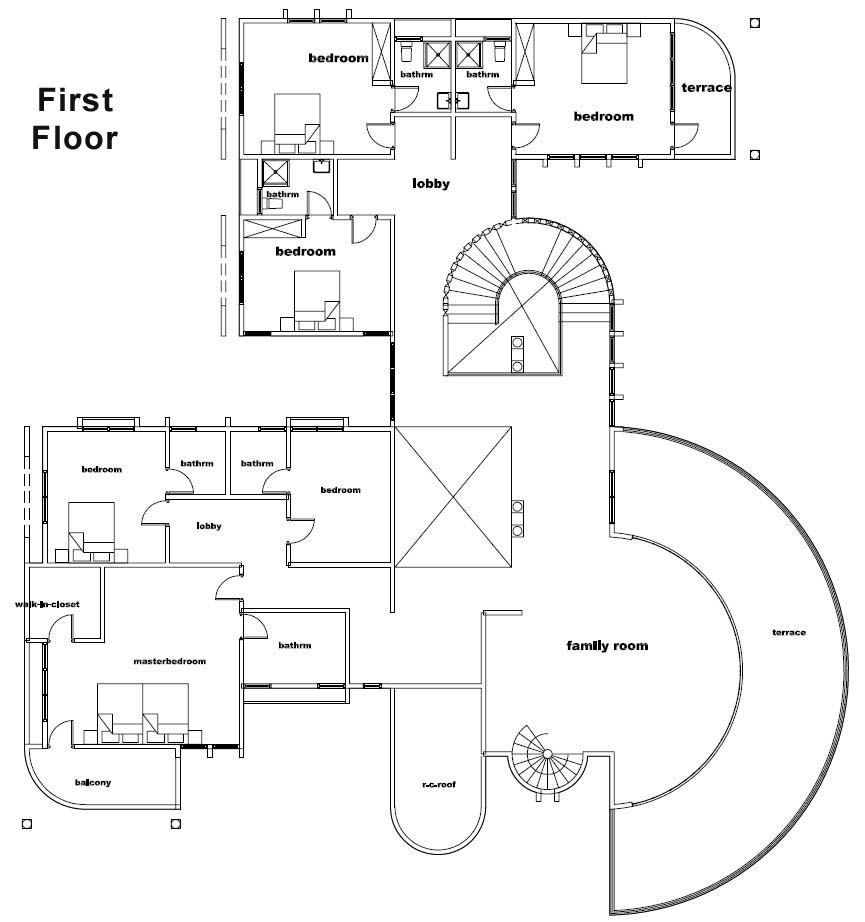
Create a budget
Drawing a budget helps put into proper perspective the total amount you are likely to spend on your building project. You determine how much you can afford to spend on your building; therefore, the budget spells out how you intend to allocate funds throughout the building process. Having a budget helps you avoid running into financial crisis. Additionally, an available budget informs you about your monetary limitations.Planning
If you wish to design your own home, then you must plan. The information gathered will help you plan in detail. You need to take the time to carefully plan out all aspects of your home’s design, the timeframe within which you wish to start and complete the building and the kinds of people you want to work with. Planning helps you get organized.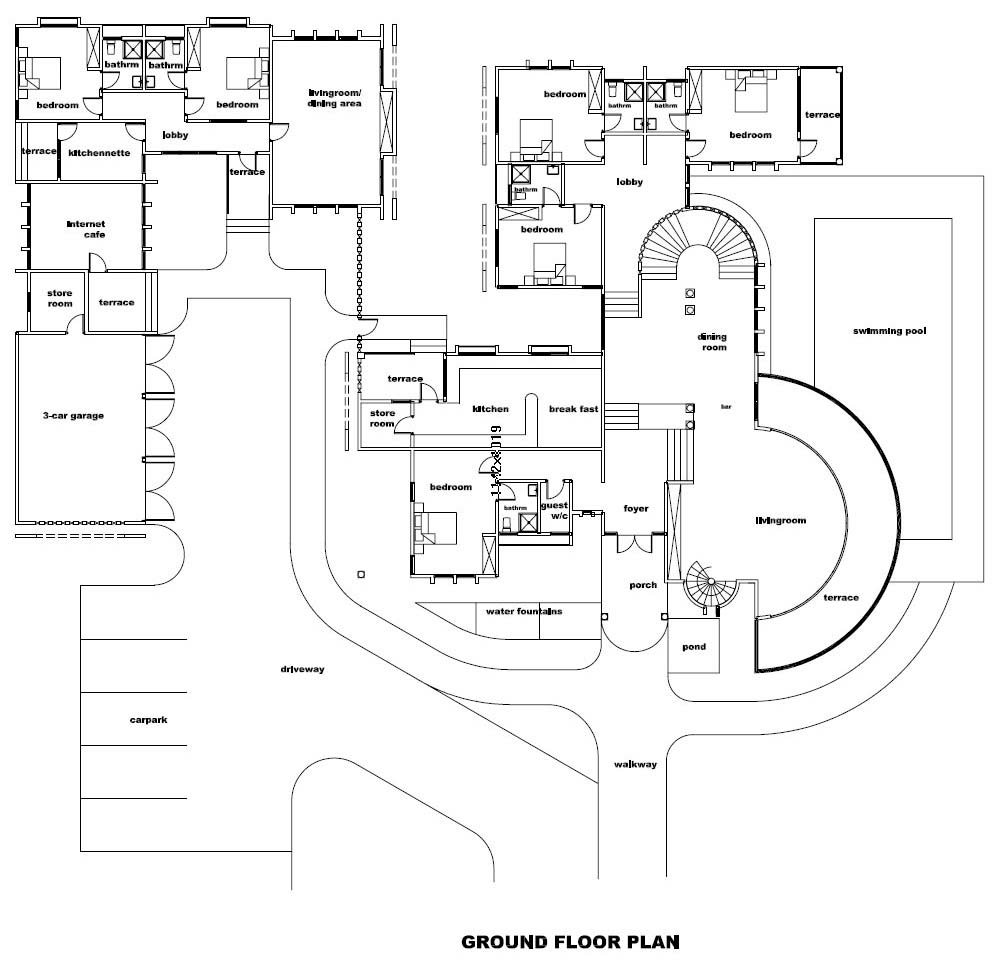
Consult the experts
It is one thing having an idea and another thing realizing that idea. Whatever your vision, you need the help of qualified professional Ghanaian Architects to help you achieve that vision and ensure that the design process conforms to accepted standards. Engaging the services of an expert Architects and builders can help you be better informed about gathering a team of other construction experts to complete your building. Therefore, you cannot ignore the skills, knowledge and expertise of professionals such as Ghana House Plans architects, general contractors, engineers and/or designers. They serve as counselors who will guide you into building quality buildings which will last.
Designing your home from scratch can be exciting and overwhelming at the same time. Notwithstanding, there is a world of experts out there who can help you through the process. So if you are thinking of designing your dream home, go to our house plans page here and select a home plan that works best for you. Our team of experts will be glad to work with you and modify the plan if needed.
Tuesday, October 18, 2016
Airport Residential Area in Accra - Ghana
The airport residential area has seen a major facelift and has metamorphosed into an amazing display of beautifully crafted architectural masterpieces. Driving from the Tetteh Quarshie roundabout towards Accra Central, there is the upsurge or rise in the number of tall buildings, which previously were non-existent. You cannot but heave a sigh in amazement at the sight of these skyscrapers, which have changed the view of the airport area.
This probably follows the plans previous and current governments laid out to modernize the capital city in their bid to attract foreign investors. Therefore, lands around the airport especially are being leased by the government to investors for major real estate developments. The Ghana Airport Company Limited’s vision of positioning Ghana as the preferred aviation gateway and leader in airport business in West Africa and the mission of providing a world-class airport and services for the benefit of stakeholders has sparked the desire to bring the area up to international standards.
 The airport area and its vicinity are being expanded for commercial activities. As a result, one cannot ignore the creation of the Airport City which harbours major hotels, malls, office and retail space and residential apartments and other developing residential areas like the Airport Hills. Individual house owners are also leasing, selling or renovating their homes for rent or turning them into guesthouses. This is in preparation to meet the demand for housing by the influx of foreign investors who are taking advantage of the investment opportunities in Ghana. Gradually, this area is becoming a commercial district attracting people from all over the world on a daily basis. It is therefore not surprising that most of the buildings in the Airport city are investments of either foreign companies or individual foreign investors and some local companies.
The presence of expatriates, coupled with the fast development of the airport area, has increased its value making it prestigious for housing and business activities. Additionally, these expatriates and local businessmen prefer to rent or buy a property closer to the airport due to proximity, convenience, security and comfort. This has increased demand causing the price of buildings and lands to rise. Depending on the type and size of space, rent around this area can cost you between 2000 and 6000 USD while buying will cost you between 600,000 and 2 million USD.
 The future of real estate in Ghana is bright. Because of Ghana’s location, political stability, ease of doing business, increasing population, growing oil industry, energy and service sectors, many developers anticipate a booming economy in the coming years. This has affected the rate at which foreign investors are building in wait for the future demand for housing, office and retail space. Also, it is expected that the emerging middle class and upper class will continue to rise and there is a need to expand the housing sector.
The development of the airport residential area is no coincidence, but intentional. As one developer put it, the time is now to sow in real estate development and reap multiples during the bumper harvest. As a result, investing in real estate in Ghana now means securing a place or positioning yourself to be part of the future success of the real estate business.
Looking to build your dream home? Start today. Let's help design your dream home. Select your home plan from here and let us know to get started.
This probably follows the plans previous and current governments laid out to modernize the capital city in their bid to attract foreign investors. Therefore, lands around the airport especially are being leased by the government to investors for major real estate developments. The Ghana Airport Company Limited’s vision of positioning Ghana as the preferred aviation gateway and leader in airport business in West Africa and the mission of providing a world-class airport and services for the benefit of stakeholders has sparked the desire to bring the area up to international standards.
The airport area and its vicinity are being expanded for commercial activities. As a result, one cannot ignore the creation of the Airport City which harbours major hotels, malls, office and retail space and residential apartments and other developing residential areas like the Airport Hills. Individual house owners are also leasing, selling or renovating their homes for rent or turning them into guesthouses. This is in preparation to meet the demand for housing by the influx of foreign investors who are taking advantage of the investment opportunities in Ghana. Gradually, this area is becoming a commercial district attracting people from all over the world on a daily basis. It is therefore not surprising that most of the buildings in the Airport city are investments of either foreign companies or individual foreign investors and some local companies.The presence of expatriates, coupled with the fast development of the airport area, has increased its value making it prestigious for housing and business activities. Additionally, these expatriates and local businessmen prefer to rent or buy a property closer to the airport due to proximity, convenience, security and comfort. This has increased demand causing the price of buildings and lands to rise. Depending on the type and size of space, rent around this area can cost you between 2000 and 6000 USD while buying will cost you between 600,000 and 2 million USD.
The future of real estate in Ghana is bright. Because of Ghana’s location, political stability, ease of doing business, increasing population, growing oil industry, energy and service sectors, many developers anticipate a booming economy in the coming years. This has affected the rate at which foreign investors are building in wait for the future demand for housing, office and retail space. Also, it is expected that the emerging middle class and upper class will continue to rise and there is a need to expand the housing sector.The development of the airport residential area is no coincidence, but intentional. As one developer put it, the time is now to sow in real estate development and reap multiples during the bumper harvest. As a result, investing in real estate in Ghana now means securing a place or positioning yourself to be part of the future success of the real estate business.
Looking to build your dream home? Start today. Let's help design your dream home. Select your home plan from here and let us know to get started.
Wednesday, October 12, 2016
Should You Pay a "Digging Fee" in Ghana Before Starting Construction?
A digging fee is an amount of money demanded by youth groups in a particular area to allow a prospective builder develop a land he or she has legitimately or legally acquired. Paying a digging fee is a means used by some people to enrich themselves. The people who demand a digging fee are usually unemployed, uneducated and idle youth groups, land guards or individuals who may or may not be connected to the chiefs or traditional authorities of a particular area.

Those who demand digging fees assert that they are the protectors or custodians of the land and their keen eyes on and interest in the land has ensured its safety and prevented encroachment. As a result, they deserve some payment for their uncalled-for service. The amount of money demanded from land developers depends on the location of the land. People can pay as high as 2000 Ghana cedis and as low as 50 Ghana cedis. The demand for a digging fee is popular only in the Greater Accra region in Ghana and the practice has become a convention among the indigenes in certain parts of Accra and its environs.

The refusal to pay a digging fee puts the life of either the landowner or the construction workers in great danger and can lead to continual harassment, theft and vandalism. A lot of people have confessed that, though they are aware that paying a digging fee is illegal, they go ahead to pay this digging fee to get these people off their backs and their property. These people can be a nuisance and brutal in their attacks. However, it is important to note that the demand for a digging fee and activities of these people are not extended to highly developed areas, real estate company developers and educated and legally conscious people. They fear they will run into trouble with such individuals.
So the question is should you pay a digging fee in Ghana before constructing your building? The answer is an outright NO. It is unofficial, illegal and limited to only to the Greater Accra area. All the other regions in Ghana do not demand the payment of a digging fee before starting to build.
In order to avoid all these problems, you should buy your land from a certified real estate agent or company. That’s why we encourage you to visit our website at www.ghanahomesforsale.com/land-in-Ghana and check out the available lands on sale.
Those who demand digging fees assert that they are the protectors or custodians of the land and their keen eyes on and interest in the land has ensured its safety and prevented encroachment. As a result, they deserve some payment for their uncalled-for service. The amount of money demanded from land developers depends on the location of the land. People can pay as high as 2000 Ghana cedis and as low as 50 Ghana cedis. The demand for a digging fee is popular only in the Greater Accra region in Ghana and the practice has become a convention among the indigenes in certain parts of Accra and its environs.
The refusal to pay a digging fee puts the life of either the landowner or the construction workers in great danger and can lead to continual harassment, theft and vandalism. A lot of people have confessed that, though they are aware that paying a digging fee is illegal, they go ahead to pay this digging fee to get these people off their backs and their property. These people can be a nuisance and brutal in their attacks. However, it is important to note that the demand for a digging fee and activities of these people are not extended to highly developed areas, real estate company developers and educated and legally conscious people. They fear they will run into trouble with such individuals.
So the question is should you pay a digging fee in Ghana before constructing your building? The answer is an outright NO. It is unofficial, illegal and limited to only to the Greater Accra area. All the other regions in Ghana do not demand the payment of a digging fee before starting to build.
In order to avoid all these problems, you should buy your land from a certified real estate agent or company. That’s why we encourage you to visit our website at www.ghanahomesforsale.com/land-in-Ghana and check out the available lands on sale.
Should You Renovate Your Home in Ghana? Here Are A Few Reasons

Many people probably have had the idea of renovating their homes to suit their current lifestyle or boost their image. However, usually, such people have been discouraged with the excuses that renovation is expensive, stressful and tiring. If you have ever had the thought of renovating your house, here are reasons why you should go ahead to execute that thought.
First, renovation adds or raises the value of your house. Renovation gives you the opportunity to change, expand, redesign and redecorate your home. It allows you to add new features to your building and convert spaces to satisfy your functional need. These additions and changes will enhance your property and increase its price. Therefore, you will make profit on your asset if you decide to sell, rent or lease it. This means that your building is likely to be at par with new buildings and therefore you can offer competitive prices on the housing market.

Renovation allows you to make future preparation for old age or retirement. If you plan to continue to live in your house for the rest of your life, then there is the need to consider renovating it. Remember that as you age, certain tasks become more difficult and challenging like climbing stairs or turning the doorknob. Thus, renovation helps you make changes according to the demands of your aging needs. Therefore, you must start planning on how you intend to have access to your home and make it more enjoyable and comfortable in your old age.
Renovation also allows you to tighten security and ensure proper safety measures in your home. As your building gets older, certain parts or features get weaker and make you and your property vulnerable. Certain parts of the building may be damaged due to rot or mold and there may be hidden dangers from outdated cables and exposed wires as well as broken pipes. Also, it is possible that the security features in your home are outmoded and they may not be resistant to burglary or threat. Renovation helps you detect and rectify all these defects.

Furthermore, renovation allows you to save money. You probably may be spending more on utility bills and repairs. This may be because your electrical and plumbing systems are not modern and in good shape. As a result, you are likely to spend more on energy consumption and pipe leakages. Renovation allows you to replace all outdated cables and exposed wires. You will also be able to install energy-efficient bulbs.
By doing these, you get to save money over the long period of usage. The conclusion of the matter is that because everything becomes older and weaker with the passage of time, renovating your house is certainly not an option or a luxury but a must.
Friday, September 16, 2016
Why Your Involvement In The Construction Process is Key to Successfully Building Your Dream Home
Owner Involvement In The Construction Process: Interference Or Responsibility?
Some builders and owners misconstrue their involvement in the building process as an unnecessary interference which may inhibit or undermine the work of the contractor. Therefore, some builders are reluctant to involve themselves in the building process of their homes. However, the owner’s role during the construction stage of building a dream house is very critical and important. After the hassle of finding a location, conducting a feasibility study, designing architectural drawings, drawing a budget, getting a building permit, etc., a lot of people take a long break relaxing while the construction of their homes is in progress. Source: zillow
This attitude is very detrimental to the budget, resources and the quality of work to be delivered by the contractor. It is important to understand that the significance of the builder or owner’s role begins the moment the building starts. It implies that the builder or owner will have the most influence over the construction process. In effect, you, as the builder/owner, have certain duties and responsibilities towards the successful development of your home building project.
The following are ways builders/owners can be part of the construction/building process of their homes: This attitude is very detrimental to the budget, resources and the quality of work to be delivered by the contractor. It is important to understand that the significance of the builder or owner’s role begins the moment the building starts. It implies that the builder or owner will have the most influence over the construction process. In effect, you, as the builder/owner, have certain duties and responsibilities towards the successful development of your home building project. The following are ways builders or owners can be part of the construction and building process of their homes:
Receive Progress Reports
It is your duty to have full knowledge and understanding about the progress of the project under construction. You must ensure that the building process is comprehensive and consistent. This means that you must establish lines of communication at all levels of the construction process with the contractor. You must demand from the contractor, if he or she is not forthcoming with one, progress reports on your building. This will ensure that the contractor builds for you exactly what you have planned.Site Visits
You must frequently visit the construction site. It allows you have first-hand information on the progress of the building project. You must continually inspect and approve of the work of the contractor during the construction process. Monitoring the construction process helps the owner ensure that the contractor is keeping up with the schedule, is within time and is complying with the contract of construction. Also, you are able to ensure that the contractor observes any on-site safety measures or precautions. It helps resolve quickly any unforeseen events that may arise during the building process.
Approval of amendments
Any modification and addition to or subtraction from the initial building plan needs your approval. You must be informed about and be part of any changes made to the construction contract since you are the financier of the project. This means that additional expenses that may arise due to the change will easily be catered for. This will dispel any form of suspicion, unwarranted fears and friction between you and the contractor. Source: zillow.
Consequently, you are not being asked to take over the job of the contractor or frustrate the building process with unreasonable demands. You are only being asked to coordinate with the contractor to ensure that quality work is delivered to you. In conclusion, it is your responsibility as a builder/owner to be involved in the construction process of your home.
Looking to design and build your dream home? visit and select your dream home plan here and contact us for a free consultation.
Should You Employ Land Caretakers to Guard Your Property in Ghana
Engaging The Services Of A Caretaker: A Sweet Dream Or A Nightmare
You probably might have heard about property or land caretakers in Ghana. You may be wondering who they are, what they do, why their services are needed and how important they may be to you. If you are thinking about owning a land in Ghana, then the subject of land caretakers should be of interest to you. Ghana Property land caretakers are individuals hired by landowners to protect, secure and maintain their property in their absence. Hiring a land caretaker is usually based on trust and for this reason, most landowners may hire people they know: friends or relatives. In cases where getting a relative or friend proves difficult, then a caretaker is hired based on recommendations from trusted people. The following are reasons why people engage the services of caretakers:Financial Problems
Usually, landowners buy lands at a time when they are not financially ready to build or develop the lands. This may be due to the difficulty in accessing funds immediately. As a result, a lot of landowners build gradually. This means that landowners develop their lands as and when they have access to funds; thus, the construction process takes many years hence the need for landowners to often engage live-in caretakers to protect their property and building materials from theft.Fear of Encroachment
Due to the absence and inability of landowners to cater for their property, the land is left bare, unattended to and uninhabited. This may invite encroachers and, in some cases swindlers, who connive with others to sell the land. To avoid these situations, you will definitely need a land caretaker in Ghana.Problem of Distance and Time
Most property owners live abroad or do not live in or near the same community where their lands are located. Therefore, these landowners will not have the time to monitor activities on their property. In essence, the advantages of having a caretaker allow you to develop your land gradually based on your financial strength, prevent encroachment, live in peace and prevent theft and vandalism. On the other hand, engaging the services of a caretaker can be a nightmare. You are likely to encounter the following risks:Threat of Theft and or Vandalism
When the relationship between the landowner and the caretaker turns sour due to a dispute and broken trust, the caretaker may take vengeance by stealing the building materials for construction or vandalize the land. In the long run, the landowner suffers a great deal of losses.Business and Trading Activities
Some caretakers tend to use the land for their personal business activities like trading to generate income for themselves. If there is an uncompleted building, portions of the building are rented out, turned into a stall or a warehouse. All these activities are at the expense of the landowner.Resale of the Land
In cases where the landowners live abroad and may not be in the country for a long time, sometimes, their lands are resold to others. The consequence of this action is litigation. The battle to reclaim your land at the law court can go on for years wasting your time and resources especially money.
Land Sanitation Challenges and Problems
Due to the absence of a place of convenience, lack of waste disposal systems, water, bathroom, etc., caretakers are forced to use portions of the land as they wish. This means that the land is used for all kinds of practices and activities like using the land as a dumping or refuse grounds for waste. This makes the land dirty and unkempt. In short, buying or owning a land shouldn’t be a sweet dream or nightmare affair. It should be a “ happily ever after” enterprise. That is why we invite you to buy your land from us. Visit our website at www.ghanahomesforsale.com and check out the available lands on sale.
Subscribe to:
Posts (Atom)


